
Book of Thomas PDF: A Comprehensive Guide
Exploring the Book of Thomas in digital format necessitates understanding its historical roots and Gnostic influences. This guide details accessing reliable PDF versions,
analyzing content, and navigating copyright considerations. It also covers PDF reader options and preservation techniques.
Understanding the Book of Thomas
The Book of Thomas, a non-canonical text discovered amongst the Nag Hammadi library, presents a unique perspective on the teachings of Jesus. Unlike the synoptic Gospels, it’s largely comprised of dialogues, focusing on inner spiritual understanding rather than narrative events. Its core message revolves around discovering the “light within” and achieving gnosis – a direct, experiential knowledge of the divine.
PDF accessibility dramatically expands the reach of this ancient text, allowing scholars and enthusiasts worldwide to study it. The text’s fragmented nature and complex symbolism require careful analysis. It’s crucial to approach the Book of Thomas not as a historical record, but as a collection of spiritual insights intended to provoke introspection.
The PDF format facilitates detailed examination, enabling features like searchability and annotation; Understanding the context of its discovery – the Nag Hammadi library – is vital for appreciating its significance within early Christian and Gnostic thought. The book’s emphasis on personal revelation distinguishes it from more orthodox interpretations of Jesus’ message.
Historical Context of the Text
The Book of Thomas’s origins are shrouded in mystery, dating back to the early centuries of the Common Era, likely the 2nd or 3rd century CE. It wasn’t part of the biblical canon established by the early Church, and its existence remained largely unknown for centuries until the discovery of the Nag Hammadi library in 1945.

This collection of Gnostic texts, found in Upper Egypt, provided invaluable insight into alternative Christian beliefs circulating during that period. The PDF format allows researchers to easily compare the Book of Thomas with other Nag Hammadi texts, revealing shared themes and influences. Its Coptic language origin suggests a strong presence within Egyptian Christian communities.
Understanding the socio-religious climate of the time – a period of diverse theological interpretations – is crucial for contextualizing the text. The rise of Gnosticism, with its emphasis on secret knowledge and spiritual liberation, provides a framework for interpreting the Book of Thomas’s unique perspective. Accessing the text in PDF form aids in broader historical analysis.
Origins and Authorship
Determining the precise origins and authorship of the Book of Thomas remains a significant challenge for scholars. Unlike the canonical Gospels attributed to specific apostles, the Book of Thomas lacks a clear authorial claim. It’s widely believed to be a compilation of sayings attributed to the apostle Thomas, presented in a dialogue format with Jesus.
However, the text isn’t a straightforward biographical account; rather, it’s a collection of spiritual insights and mystical revelations. The PDF versions available today are based on Coptic manuscripts discovered at Nag Hammadi, but the original language is thought to be Greek. This suggests a complex transmission history and potential alterations over time.
Scholarly consensus points towards a Gnostic author or community responsible for shaping the final form of the text. The PDF format facilitates comparative analysis with other Gnostic writings, helping to identify shared literary patterns and theological concepts. The anonymity surrounding its authorship underscores its focus on the message rather than the messenger.
Gnostic Influences on the Book of Thomas
The Book of Thomas is deeply interwoven with Gnostic thought, evident in its emphasis on inner knowledge (gnosis) as the path to salvation. Unlike mainstream Christian theology focusing on faith and obedience, Thomas prioritizes direct experiential understanding of the divine. PDF versions allow for detailed textual analysis revealing these Gnostic hallmarks.
Key Gnostic themes include a dualistic worldview separating a transcendent, unknowable God from a flawed, material creation. The text portrays the material world as an illusion, hindering spiritual awakening. The “secret sayings” within the Book of Thomas, readily accessible in PDF format, emphasize the importance of discovering one’s inherent divine spark.

Furthermore, the text’s rejection of external religious authority and emphasis on individual revelation align with Gnostic principles. Studying the Book of Thomas in PDF form alongside other Gnostic texts, like those found in the Nag Hammadi library, illuminates these shared ideological foundations and provides a richer understanding of its unique perspective.
The Nag Hammadi Library and Discovery
The Book of Thomas gained prominence with the 1945 discovery of the Nag Hammadi library near the Egyptian town of Nag Hammadi. This collection of Gnostic texts, preserved in thirteen codices, dramatically reshaped our understanding of early Christian diversity. PDF reproductions of these codices, including the Book of Thomas, are now widely available for scholarly study.
Discovered by local farmers, the texts were written in Coptic, a late form of the Egyptian language. They represent translations from earlier Greek originals, offering insights into alternative Christian beliefs circulating in the Roman Empire. The Book of Thomas, found within these codices, provides a unique perspective on Jesus’ teachings, differing significantly from the canonical Gospels.
Access to high-quality PDF scans of the Nag Hammadi library has revolutionized research, allowing scholars and enthusiasts worldwide to examine these ancient texts firsthand. These digital versions facilitate comparative analysis, textual criticism, and a deeper appreciation for the historical context surrounding the Book of Thomas.
What is a PDF and Why is it Relevant?
A Portable Document Format (PDF) is a file format developed by Adobe that preserves document formatting regardless of the software, hardware, or operating system used to view it. For ancient texts like the Book of Thomas, this is crucial. PDFs ensure the text appears as intended, maintaining original layouts and fonts, vital for scholarly accuracy.
The relevance to the Book of Thomas stems from its historical nature and the need for widespread, accessible study. Digitizing the text into PDF format allows researchers globally to access and analyze it without concerns about text corruption or formatting inconsistencies. It facilitates easy sharing and archiving, safeguarding the text for future generations.
Furthermore, PDFs often support features like searchability, allowing users to quickly locate specific passages or keywords within the Book of Thomas. This is invaluable for research and comparative textual analysis. The format’s stability and universality make it the ideal medium for distributing and preserving this important Gnostic text.
PDF Format Explained
The PDF (Portable Document Format) isn’t simply an image of text; it’s a complex format containing text, fonts, graphics, and even interactive elements. It utilizes a combination of text description, font embedding, and image data to recreate a document faithfully on any device.
For the Book of Thomas, a PDF can be created from scanned images of the original manuscripts or from transcriptions of the text. Optical Character Recognition (OCR) technology is often employed to convert scanned images into searchable, selectable text within the PDF. This allows for digital analysis beyond simple visual reading.
PDFs can be ‘tagged,’ adding structural information that enhances accessibility for screen readers and other assistive technologies. This is particularly important for scholarly editions of the Book of Thomas, ensuring wider access. Different PDF versions (e.g., PDF/A for archiving) offer varying levels of long-term preservation features, crucial for safeguarding this ancient text digitally.
Accessibility of the Book of Thomas in PDF Format
Ensuring the Book of Thomas is accessible in PDF format is vital for inclusive scholarship and wider readership. A poorly constructed PDF can present significant barriers for individuals with disabilities.
Key accessibility features include tagged PDFs, which define the document’s structure (headings, paragraphs, images) for screen readers. Alternative text descriptions for images are crucial, allowing visually impaired users to understand visual content. Proper reading order ensures logical navigation for assistive technologies.
Font embedding is also important; it guarantees the text displays correctly regardless of the user’s system fonts. PDFs should adhere to accessibility standards like WCAG (Web Content Accessibility Guidelines). OCR accuracy impacts accessibility – errors in text recognition create barriers.
Furthermore, PDFs should be reflowable, allowing text to adjust to different screen sizes and zoom levels. Consideration for color contrast enhances readability for users with low vision. Accessible PDFs empower a broader audience to engage with this significant Gnostic text.
Where to Find Reliable Book of Thomas PDF Downloads
Locating trustworthy PDF versions of the Book of Thomas requires careful navigation of online resources. Prioritize academic institutions and established digital libraries for reliable access.
The Internet Archive often hosts digitized texts, including early translations and scholarly editions. University websites with religious studies departments may offer PDFs for research purposes. Beware of unofficial websites offering downloads, as these may contain inaccurate transcriptions or even malware.
Project Gutenberg, while not always featuring obscure texts like the Book of Thomas, is a generally safe source for classic literature. Digital libraries specializing in Gnostic texts or early Christian writings are excellent starting points. Always verify the source’s reputation before downloading any file.
Checking for ISBNs or publisher information can help confirm authenticity. Consider using scholarly databases like JSTOR or Academia.edu, which may provide access to articles referencing the text and potentially links to reliable PDFs. Prioritize sources with clear copyright information.
Legality and Copyright Considerations
Navigating the legal landscape surrounding the Book of Thomas PDF downloads is crucial. While the text itself is ancient, modern translations and scholarly editions are protected by copyright law.
Generally, the Book of Thomas falls into the public domain due to its age, meaning the original text isn’t subject to copyright. However, specific translations, introductions, or annotations added by scholars are copyrightable.
Downloading copyrighted material without permission constitutes infringement. Always check the licensing terms of any PDF before downloading or distributing it. Many academic institutions offer PDFs for personal, non-commercial use only.
If you intend to use the Book of Thomas PDF for research, teaching, or publication, ensure you have the necessary permissions or licenses. Fair use doctrines may apply in certain educational contexts, but it’s best to consult legal counsel if unsure. Respecting copyright protects the work of translators and scholars.
Analyzing the Content of the Book of Thomas
A deep dive into the Book of Thomas reveals a unique perspective on early Christian thought, best explored through a PDF version for detailed study. The text primarily consists of dialogues between Jesus and his disciple Thomas, diverging significantly from the canonical Gospels.
Central to analysis is recognizing the “secret sayings” attributed to Jesus, focusing on inner spiritual knowledge rather than outward rituals. These sayings emphasize self-discovery and the inherent divinity within each individual, a hallmark of Gnostic beliefs.
Scholars debate the text’s relationship to other Gnostic texts found in the Nag Hammadi library. Examining recurring themes – light, darkness, the self, and the cosmos – provides valuable insights. Comparing the Book of Thomas with canonical Gospels highlights contrasting theological viewpoints.
PDFs facilitate close reading, annotation, and cross-referencing. Pay attention to Thomas’s questioning nature and Jesus’s often enigmatic responses, crucial for understanding the text’s complex symbolism.
Key Themes and Symbolism
The Book of Thomas, readily accessible in PDF format, is rich with recurring themes and potent symbolism central to Gnostic thought. A prominent theme is the pursuit of inner knowledge – gnosis – achieved through self-reflection and understanding one’s divine origin.
Light and darkness frequently appear as metaphors for spiritual awareness and ignorance, respectively. The self, or the true inner being, is often contrasted with the material world, perceived as illusory and hindering spiritual growth. Cosmological symbolism, referencing the realms beyond human perception, is also prevalent.
Analyzing the text’s symbolism requires careful consideration of its context within Gnostic cosmology. The PDF format allows for easy annotation and comparison of symbolic representations across different passages.
Recurring motifs, like birds and the image of the ‘inner man,’ demand interpretation. Understanding these symbols unlocks deeper layers of meaning within the Book of Thomas’s unique spiritual framework.
Thomas’s Unique Perspective on Jesus’ Teachings
The Book of Thomas, conveniently studied via PDF versions, presents a distinctive interpretation of Jesus’s teachings, diverging from the canonical Gospels. Unlike narratives focused on miracles and historical events, Thomas emphasizes Jesus’s esoteric pronouncements – “secret sayings” – aimed at awakening spiritual consciousness.
Thomas portrays Jesus as a revealer of inner truths, urging disciples to discover the “Kingdom of Heaven” within themselves, rather than awaiting a future apocalyptic event. This inward focus is a hallmark of Gnostic thought, influencing the text’s perspective.
The PDF format facilitates comparative analysis with the synoptic Gospels, highlighting Thomas’s emphasis on self-knowledge and the rejection of external authority. Jesus’s role shifts from a savior figure to a spiritual guide, prompting individual enlightenment.
This unique perspective, accessible through digital PDFs, challenges traditional Christian doctrines and offers a compelling alternative understanding of Jesus’s message.
Comparison with Canonical Gospels
Examining the Book of Thomas, readily available in PDF format, reveals significant contrasts with the canonical Gospels of Matthew, Mark, Luke, and John. While the canonical texts narrate Jesus’s life, death, and resurrection as historical events, Thomas primarily consists of 114 sayings attributed to Jesus, lacking a narrative framework.
The PDF allows for side-by-side comparison, demonstrating Thomas’s absence of miracle stories, parables with clear moral lessons, or detailed accounts of Jesus’s interactions with specific individuals. Instead, it focuses on cryptic pronouncements requiring inner interpretation.
Unlike the emphasis on faith and obedience in the canonical Gospels, Thomas stresses gnosis – direct, experiential knowledge of the divine. This difference reflects the Gnostic influences shaping the text, accessible through digital PDFs.
Analyzing these distinctions via PDF study illuminates the diversity of early Christian thought and provides a valuable perspective on the evolving understanding of Jesus’s teachings.
Interpretations and Scholarly Debate
The Book of Thomas, widely studied through accessible PDF versions, sparks ongoing scholarly debate regarding its meaning and historical context. Interpretations range from viewing it as a purely Gnostic text to considering it a source reflecting earlier, pre-Gnostic traditions about Jesus’s sayings.
Some scholars argue the “secret sayings” within the PDF represent a distinct theological perspective, emphasizing individual spiritual realization over institutional dogma. Others contend these sayings are fragmented remnants of a larger, lost Gospel.
The PDF format facilitates comparative analysis with other Nag Hammadi texts, revealing shared themes and linguistic patterns. However, pinpointing the precise origins and authorship remains elusive, fueling continued discussion.
Debates also center on the relationship between Thomas and the synoptic Gospels. Does Thomas preserve authentic Jesus traditions lost in the canonical accounts, or does it represent a later, more esoteric development? The PDF allows researchers to engage directly with the text, contributing to this vibrant scholarly conversation.
The Role of Dialogue in the Text
The Book of Thomas, readily available in PDF format, is uniquely structured around dialogues, primarily between Jesus and his disciple Thomas. This conversational style distinguishes it from the narrative approach of canonical Gospels, focusing instead on direct exchange of ideas and spiritual insights.
These dialogues aren’t presented as historical events but as explorations of inner understanding. Jesus’s responses often aren’t straightforward answers, but rather paradoxical statements designed to provoke contemplation within the reader – or, in the context of a PDF, the researcher.
The PDF’s accessibility allows for close textual analysis of these exchanges, revealing recurring motifs and symbolic language. Thomas frequently struggles to grasp Jesus’s teachings, representing the human quest for enlightenment.
Scholars debate whether these dialogues reflect actual interactions or are literary devices used to convey Gnostic concepts. Regardless, the dialogical form is central to the text’s meaning, encouraging active engagement and personal interpretation facilitated by the PDF’s ease of access.
Understanding the “Secret Sayings”
The Book of Thomas, often studied via PDF versions, is renowned for its collection of “secret sayings” attributed to Jesus. These aren’t secrets in the sense of hidden information, but rather profound truths revealed only to those spiritually prepared to receive them. Accessing the text in PDF format allows for detailed examination of these enigmatic pronouncements.

Unlike the parables in the canonical Gospels, these sayings are typically concise and aphoristic, demanding careful contemplation. They often challenge conventional understandings of reality, focusing on inner knowledge and the divine spark within each individual.
The PDF format facilitates comparative analysis with other Gnostic texts, revealing shared themes and symbolic language. Scholars believe these sayings represent a distinct tradition of Jesus’s teachings, emphasizing personal experience over dogma.
Understanding these “secret sayings” requires recognizing their symbolic nature and engaging with the text on a deeper, intuitive level. The readily available PDF versions empower researchers and enthusiasts to explore these profound insights independently.
Technical Aspects of Book of Thomas PDFs
When accessing the Book of Thomas in PDF format, several technical considerations arise. File size varies significantly depending on scanning quality and inclusion of supplemental materials like introductions or scholarly notes. Higher resolution scans yield larger files, demanding more storage space and bandwidth.
PDF reader software is crucial; Adobe Acrobat Reader is a standard, but alternatives like Foxit Reader or built-in browser viewers are viable. Optical Character Recognition (OCR) quality impacts searchability – a text-searchable PDF is invaluable for research.
PDFs may be image-based (scanned pages) or text-based (created digitally). Image-based PDFs require OCR for text selection and copying. Optimizing PDFs for reading involves adjusting zoom levels and utilizing bookmark features for navigation.
For long-term preservation, consider PDF/A format, an archival standard ensuring consistent rendering across platforms. Regularly backing up PDF copies is essential to prevent data loss. Understanding these technical aspects enhances the research experience.
PDF Reader Software Options
Numerous software options exist for viewing and interacting with Book of Thomas PDFs. Adobe Acrobat Reader DC remains the industry standard, offering comprehensive features like commenting, form filling, and digital signatures – it’s free but resource-intensive.
Foxit Reader presents a lightweight alternative with comparable functionality and faster performance. SumatraPDF is exceptionally minimal, prioritizing speed and simplicity, ideal for basic reading without extensive features.
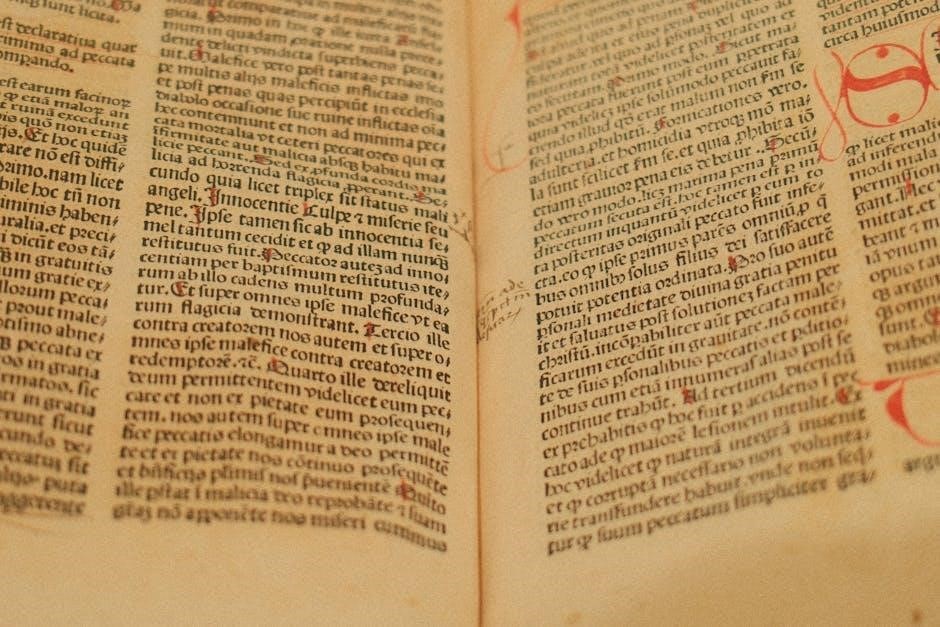
Web browsers like Chrome, Firefox, and Edge have built-in PDF viewers, convenient for quick access but lacking advanced tools. Dedicated PDF editors, such as PDFelement or Nitro PDF Pro, provide extensive editing capabilities, though they typically require a paid subscription.
Choosing the right software depends on your needs. For scholarly study, Adobe or Foxit are recommended. For casual reading, browser viewers or SumatraPDF suffice. Consider compatibility with your operating system and desired features.
File Size and Quality Considerations
The file size of a Book of Thomas PDF directly impacts download time and storage space; Larger files generally indicate higher image resolution, crucial for legible ancient text reproductions. However, excessively large files can be cumbersome to share and open, especially on older devices.
PDF quality hinges on the original source material and scanning/digitization process. High-resolution scans preserve detail, but increase file size. Optical Character Recognition (OCR) adds searchable text, enhancing usability but potentially introducing errors if the original text is damaged.
Compression techniques balance file size and quality. Lossless compression maintains original data, while lossy compression reduces size at the expense of some detail. Prioritize PDFs with clear, readable text and minimal artifacts.
Beware of extremely small files, as they may contain low-resolution images or incomplete content. Always verify the source’s reputation and assess the PDF’s visual clarity before relying on its contents for research.
Optimizing PDFs for Reading and Research
Enhancing the usability of a Book of Thomas PDF is vital for effective study. Utilize PDF reader features like zoom, bookmarks, and highlighting to navigate and annotate the text efficiently. Search functionality, enabled by OCR, allows quick location of specific passages or keywords.
Consider reflowing the text if the PDF’s layout hinders readability on smaller screens. Many readers offer options to adjust font size and spacing. Exporting sections as text files can facilitate deeper analysis and integration into research papers.
For comparative studies, side-by-side viewing of multiple PDFs is invaluable. Some readers support this feature, while others require external tools. Creating a digital library with organized folders and descriptive filenames streamlines research.
Regularly back up your PDF collection to prevent data loss. Explore cloud storage options for accessibility across devices. Prioritize PDFs with clear table of contents and properly tagged headings for efficient navigation.
Digital Preservation of Ancient Texts

The digitization of the Book of Thomas, via PDF and other formats, represents a crucial step in its preservation. Unlike fragile papyrus or decaying manuscripts, digital copies offer resilience against physical deterioration and loss. However, digital preservation isn’t simply about creating a PDF; it demands ongoing maintenance.
File format obsolescence is a significant threat. PDF/A, an ISO-standardized version of PDF, is designed for long-term archiving, embedding all necessary fonts and information. Regularly converting PDFs to PDF/A ensures future accessibility.

Metadata is equally important. Detailed descriptions, authorship information, and provenance data enhance discoverability and contextual understanding. Robust backup systems, including geographically diverse storage, safeguard against catastrophic data loss.
Collaboration between institutions and scholars is vital. Shared digital repositories and standardized preservation practices ensure the Book of Thomas remains accessible to future generations, fostering continued research and interpretation.
The Future of Ancient Texts in Digital Formats
The Book of Thomas PDF exemplifies a broader trend: the increasing reliance on digital formats for preserving and studying ancient texts. Future advancements promise even more sophisticated methods of access and analysis. Expect enhanced Optical Character Recognition (OCR) to improve searchability within PDFs, even for damaged or faded texts.
Artificial Intelligence (AI) will play a growing role, potentially assisting with translation, textual reconstruction, and identifying subtle patterns in the text. Interactive PDFs, incorporating annotations, commentaries, and multimedia resources, will become commonplace.
Blockchain technology could offer a secure and verifiable record of textual authenticity, combating forgery and ensuring provenance. Virtual and augmented reality applications might allow immersive experiences, recreating the historical context of the Book of Thomas.

However, ethical considerations remain paramount. Ensuring equitable access, protecting intellectual property, and addressing the digital divide are crucial for a future where ancient knowledge is truly democratized.

Resources for Further Study
Delving deeper into the Book of Thomas requires consulting a variety of scholarly resources. The Nag Hammadi Library website (gnosis.org) provides access to translations and related texts, crucial for contextual understanding. Explore academic databases like JSTOR and Academia.edu for peer-reviewed articles analyzing the text’s Gnostic influences and historical significance.

Several books offer comprehensive analyses, including works by Marvin Meyer and James Robinson, prominent scholars in the field of Gnostic studies. Online forums and discussion groups dedicated to early Christianity and Gnosticism can foster engaging dialogue and exchange of insights.
For PDF-specific resources, investigate digital libraries like the Internet Archive, though verifying the reliability of sources is essential. University websites often host digitized collections of ancient texts. Remember to critically evaluate all sources and cross-reference information to ensure accuracy.
Finally, consider exploring resources on Coptic language and early Christian history to enrich your understanding of the Book of Thomas’s origins.